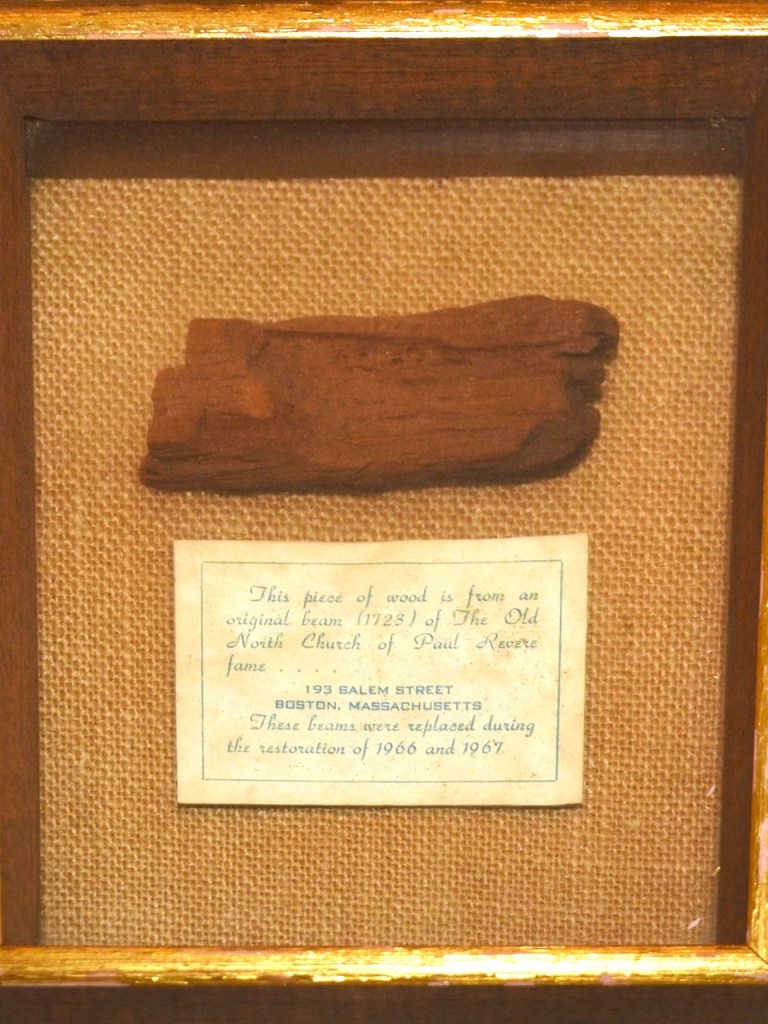
Beam From the Old North Church
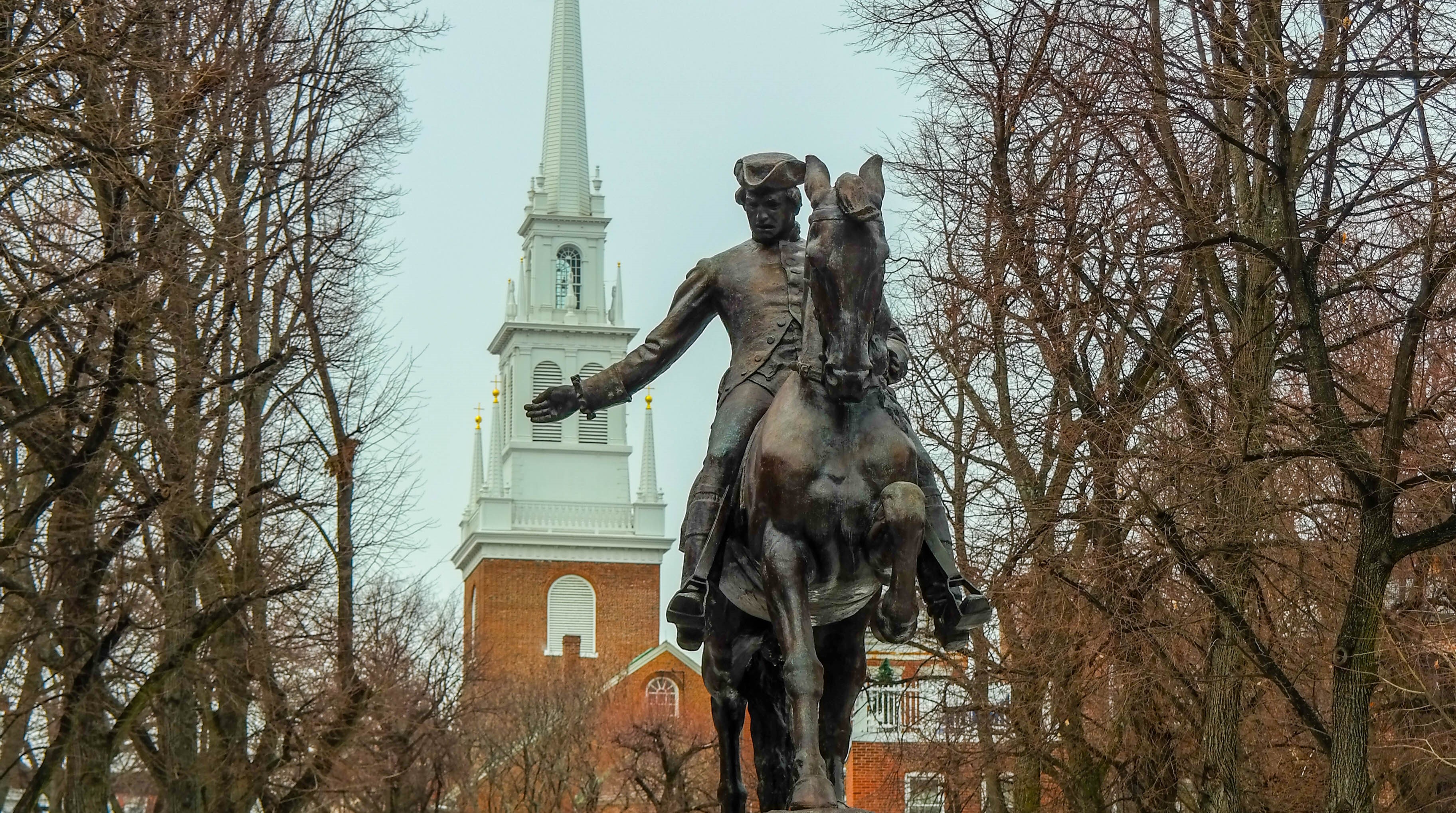
This small wooden shard comes from a beam used to build the Old North Church in Boston. The Old North Church stands as a symbol of rebellion and freedom due to the part it played at the start of the American Revolution.
Foundations of the Old North Church
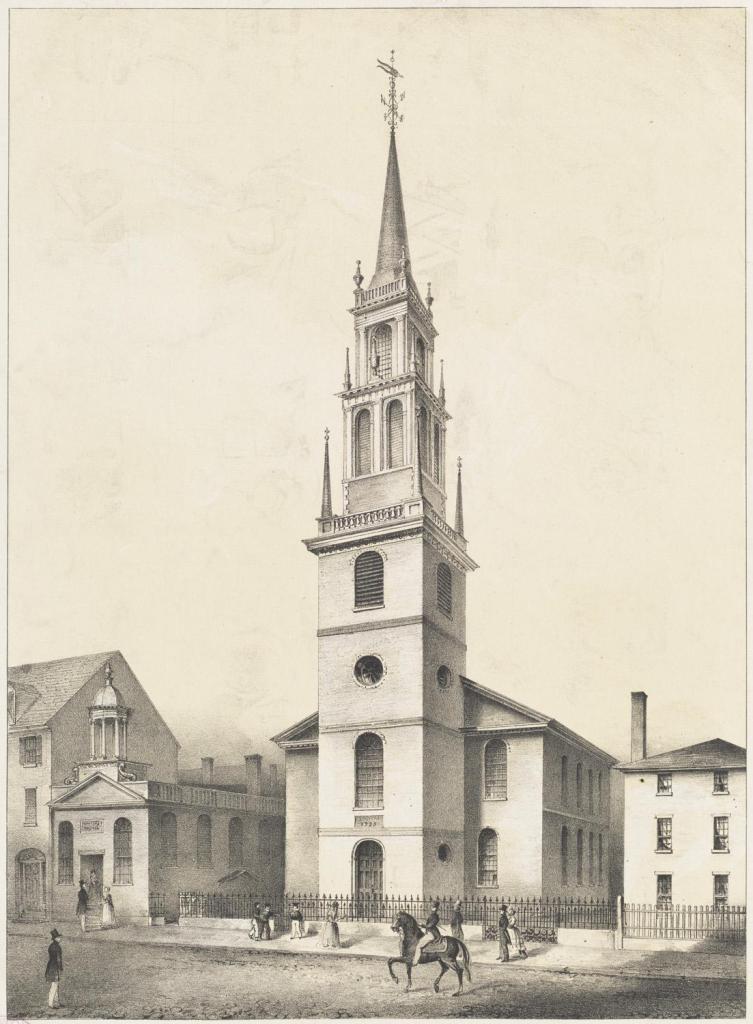
Boston, Massachusetts was settled in 1630 by English Puritans, and was self-governing until 1686, when the English crown gained control of Boston. This change brought the Church of England to Boston. By 1723, the Anglican community had outgrown its existing church, King’s Chapel. It was this year that Christ Church, often called Old North Church, was constructed to serve prominent members of the Boston community. The steeple of later fame was built in 1740. Interestingly, in 1750, a 15-year-old Paul Revere was a founding member of the bell-ringers guild.
Christ Church and the Start of the Revolution
Throughout New England, Anglican churches often served Loyalist congregations. This, however, was far from the reality at Christ Church. The congregation was split between Patriots and Loyalists, with future rebels worshipping in the same church as the royal military governor.
This political divide strained the church and resulted in the Loyalist minister resigning on April 18, 1775. That very night, the event that would make the church famous occurred.
In April of 1775, British soldiers prepared to seize a Patriot arsenal at Concord. In response, Paul Revere and other Patriots planned to race inland and warn the people. To achieve this, Revere “called upon a friend, and desired him to make the Signals.” This friend was John Pulling, who was directed to hang one lantern from the steeple if the British marched out of Boston and hang two if the British used boats.
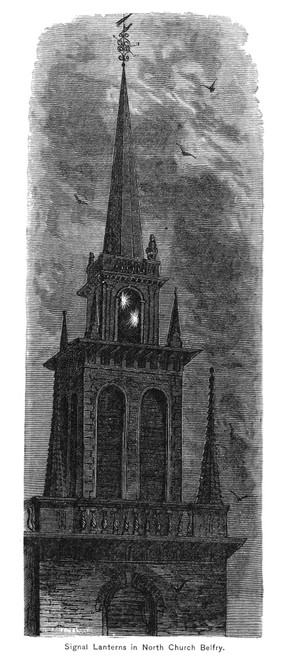
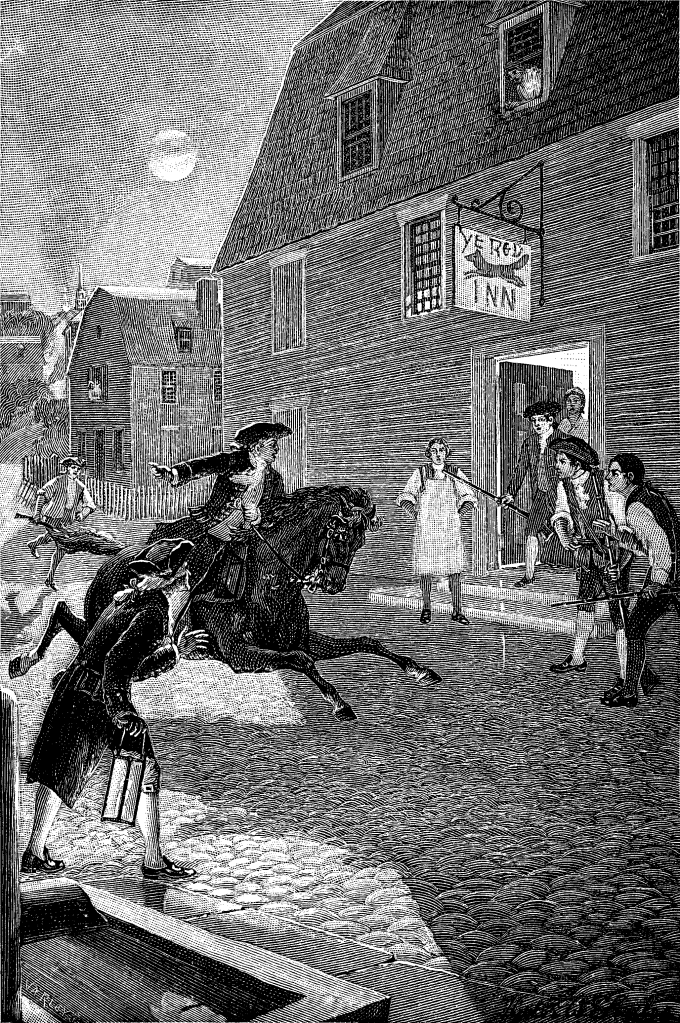
On the night of April 18, 1775, Pulling and the church’s sexton climbed up the steeple and briefly hung two lanterns before fleeing to evade arrest. The signal alerted the people outside Boston before Paul Revere even began his ride. The signal was then relayed down the roads to Concord, where minutemen began preparing for conflict. By dawn, British soldiers had engaged militias in the first battles of the American Revolution.
Old North Church Since the Signal
With the minister’s resignation and grave political matters taking precedence, the church was closed until 1778 when the Rev. Stephen Lewis, a British army chaplain, swore allegiance to the United States and became the rector. In the years after the Revolution, Christ Church expanded rapidly, and became a symbol of American patriotism and bravery for its role in Paul Revere’s midnight ride, which would be immortalized by Henry Wadsworth Longfellow’s famous poem, Paul Revere’s Ride. The Old North Church is currently both a historical cite, and a functioning Episcopal Church.

