
Silver Ingots Displaying the Bill of Rights
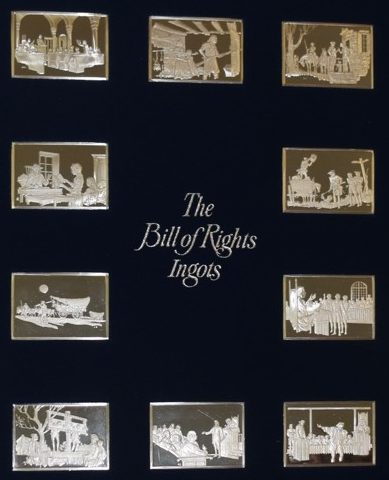
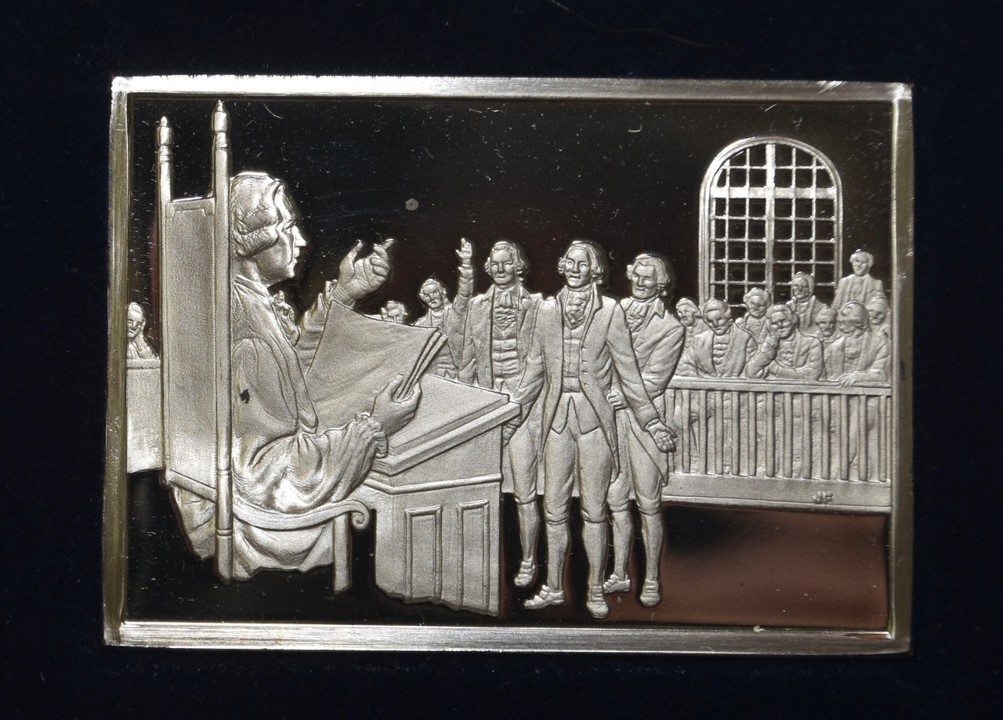
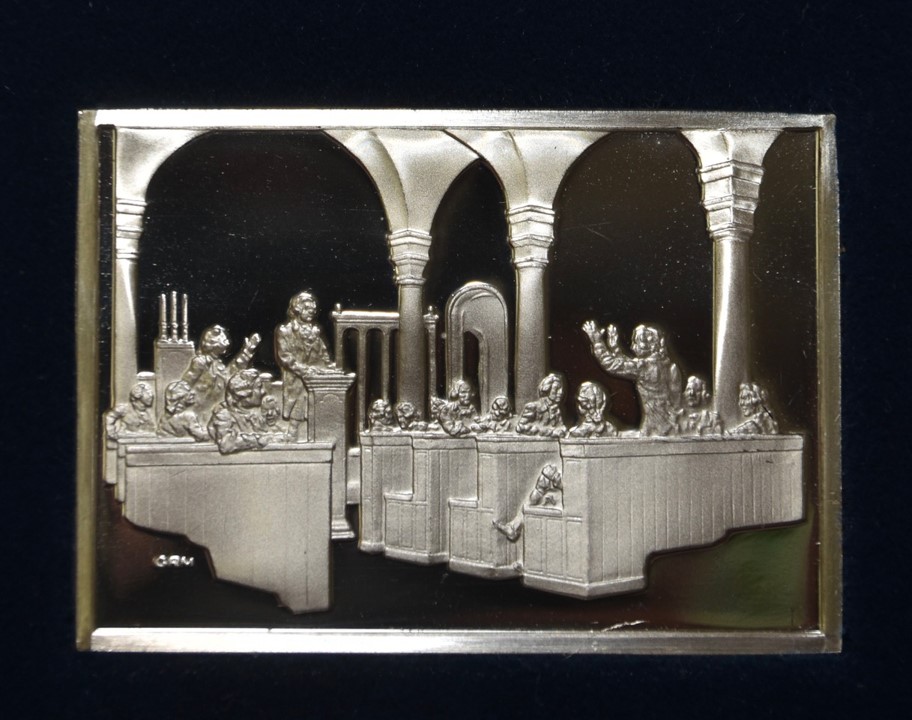
These ingots of silver have been cast into pieces of art representing the ten original amendments to the constitution – now called the Bill of Rights because of the guarantees they place on people’s liberties.
Constitutional Controversy
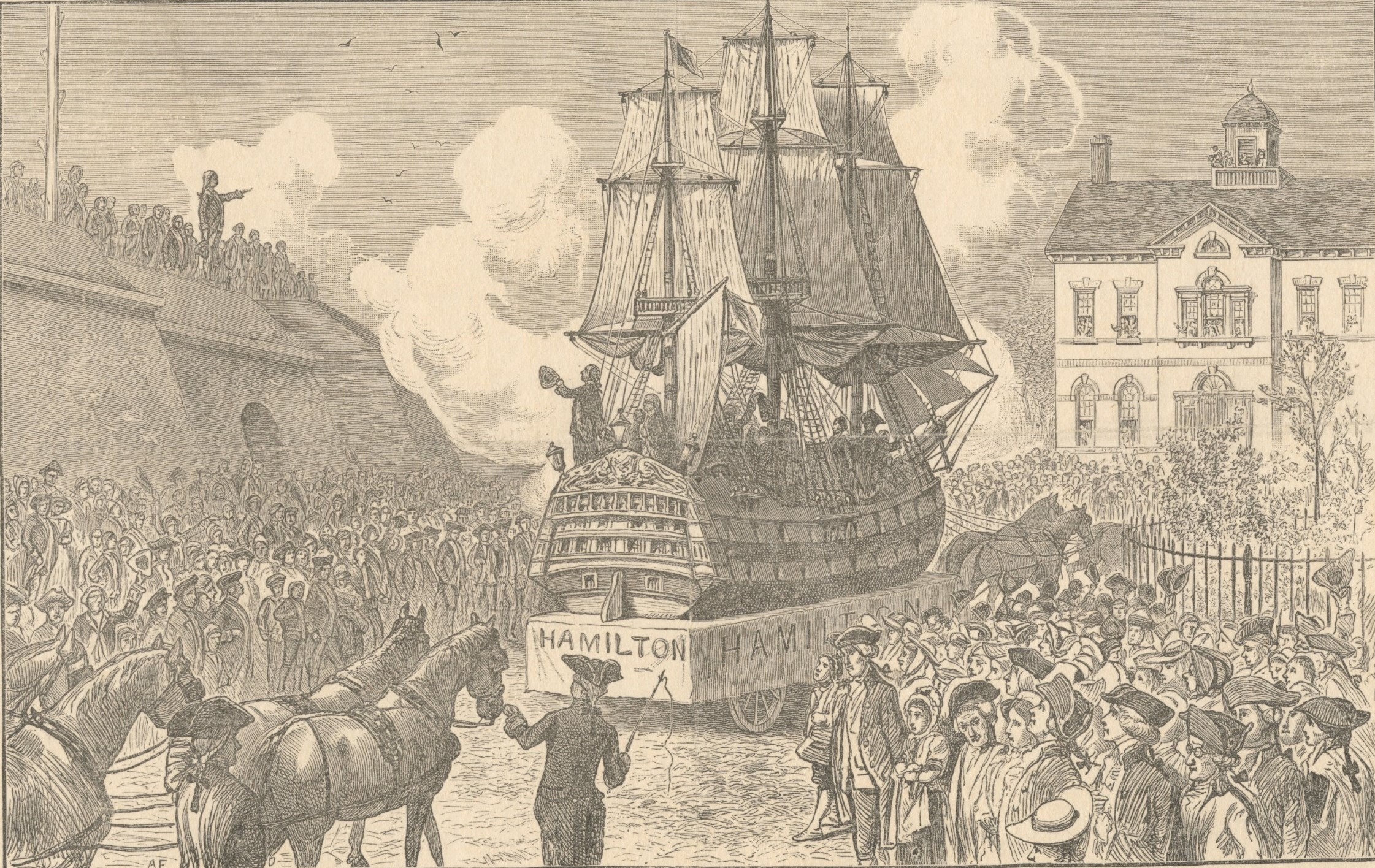
When the Constitution was being written in 1787, it was proposed that a statement protecting individual rights be added. The Constitutional Convention decided that this was unnecessary and sent the Constitution to the states to be ratified without the addition.
The debate over the ratification of the Constitution had two camps: the Federalists, who supported the constitution; and Anti-Federalists, who opposed it. The Anti-Federalists argued that the constitution created a government that was too strong, and a common criticism they made was that there was not a section protecting the people’s rights. The Federalists compromised and promised to create a bill of rights to win over many Anti-Federalists. The Constitution was ratified in 1789. Two years later, Congress proposed twelve amendments to the Constitution that would address Anti-Federalist complaints. Ten of these were ratified by the states, and they went on to be known as the Bill of Rights.
The Slow Process of Incorporation
Despite the passage of the Bill of Rights in 1791, they remained relatively obscure. At the time, the Bill of Rights was seen as only applying to the Federal government, meaning states did not have to guarantee the freedoms protected in the Bill of Rights. In 1833, the Supreme Court upheld this belief. In 1868, the newly passed 14th Amendment contained a clause stating, “No State shall make or enforce any law which shall abridge the privileges or immunities of citizens of the United States.” This seemed to make the Bill of Rights applicable to the states, but once again, the Supreme Court said it was not. In fact, as late as 1920, no law had been struck down on First Amendment grounds.
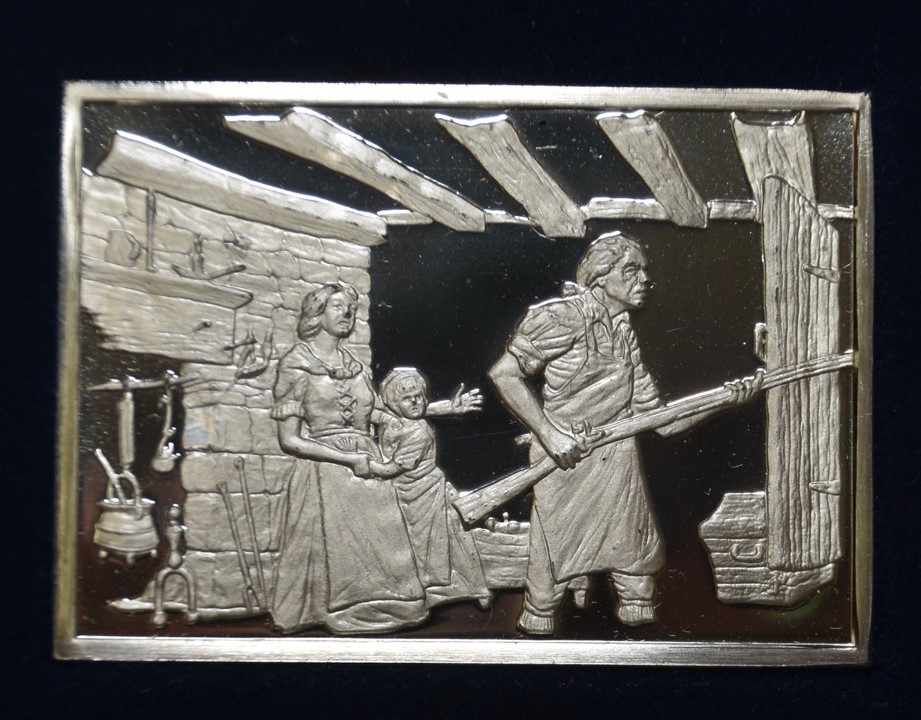
However, in 1925, the Supreme Court ruled that under the 14th Amendment, states must protect a person’s right to free speech. This began the process of incorporation, where states were required to uphold the freedoms protected by the Bill of Rights. In the 1950s and 60s, much of the Bill of Rights was incorporated, and this trend has continued to this day. Rights that have been incorporated include the right to counsel (Gideon v. Wainwright, 1963), greater protection from self-incrimination (Miranda v. Arizona, 1966), and the right to bear arms (McDonald v. Chicago, 2010).
Today, most of the highest-profile cases that reach the Supreme Court involve the Bill of Rights.

