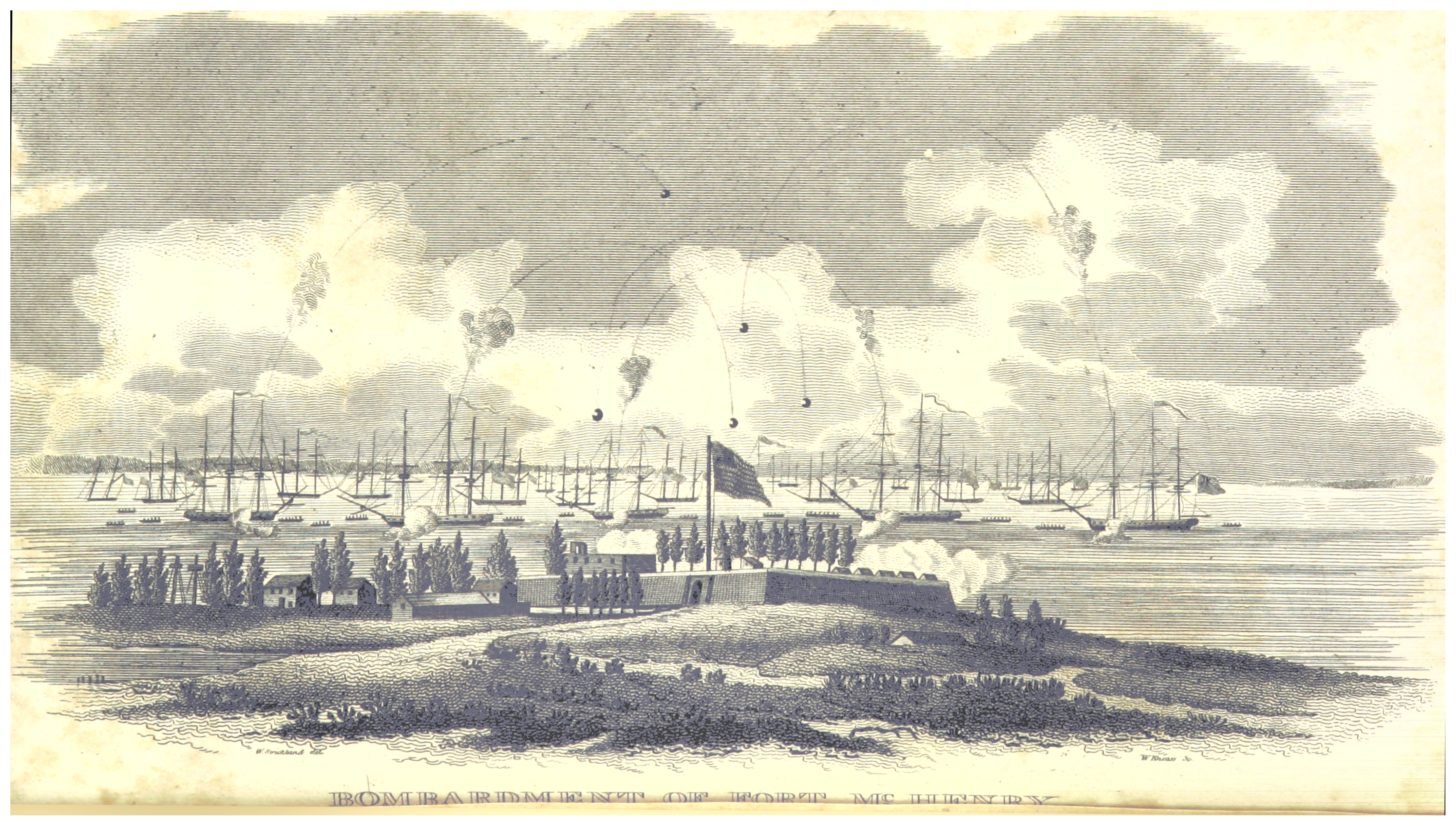
Engraving of the Battle of Fort McHenry
This engraving of Francis Scott Key provides a representation of the Battle of Fort McHenry, the battle our national anthem was written about.
The Battle of Fort McHenry
On June 1st, 1812, President James Madison asked that Congress declare war on the United Kingdom as retaliation for British interference with American trade and the forcing of American sailors to join the Royal Navy. This declaration of war was incredibly controversial, and there was a strong internal opposition to what many considered a useless war. There were many important battles in the War of 1812, but one of the most remembered is the Battle of Fort McHenry.
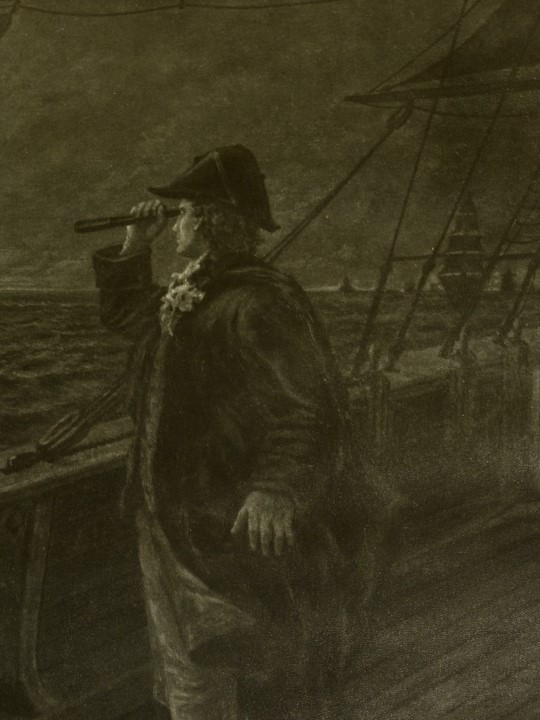
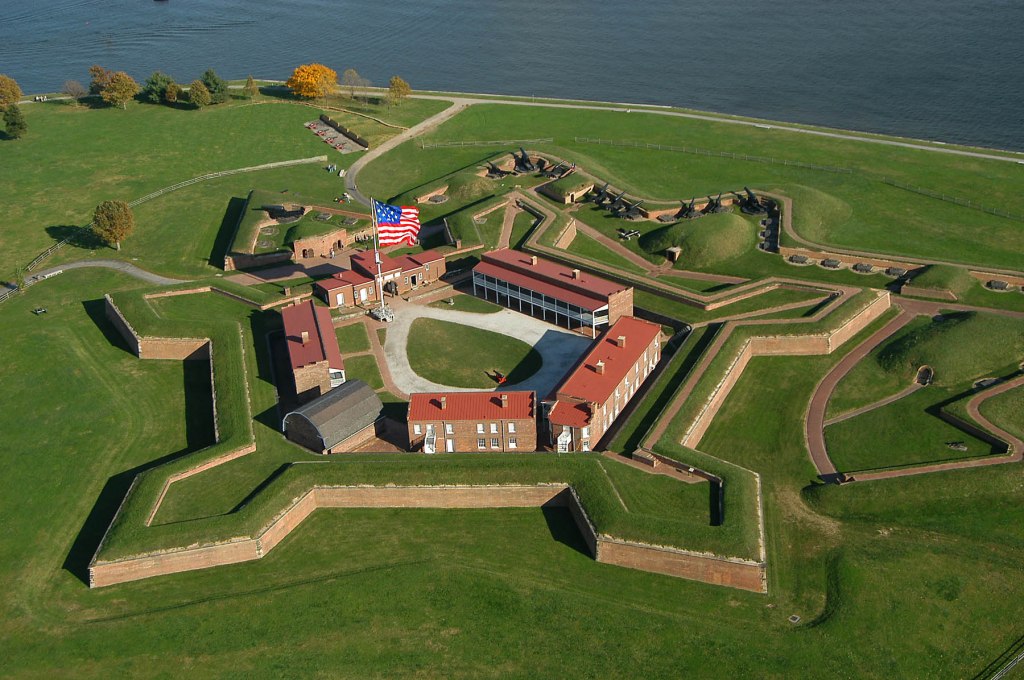
Coming just weeks after they burned the White House and other government buildings to the ground, in 1814 the British were attempting to capture Baltimore. To do this, the Royal Navy planned to attack Fort McHenry, which was at the mouth of Baltimore Harbor.
On September 7, a young lawyer named Francis Scott Key and a US military officer boarded the Tonnant, a British warship and the flagship of the force set to attack Baltimore. They were there to negotiate the release of an American doctor who had been captured by the British. Key and the officer managed to have the prisoner released, but were made to wait until the imminent battle was over. Through the afternoon and night of September 13, the three American men watched as the British battered the fort with over 1,500 cannonballs, shells, and rockets.
On the morning of September 14, the Americans onboard were uncertain of the result of the battle. As such, they were relieved to see the men of Fort McHenry raising the giant United States flag – indicating that the fort was not lost. Francis Scott Key was so moved by the sight that he quickly wrote a poem about it, which he would later finish and have printed in the Baltimore Patriot newspaper as the “Defense of Fort M’Henry” – later changed to the Star-Spangled Banner.
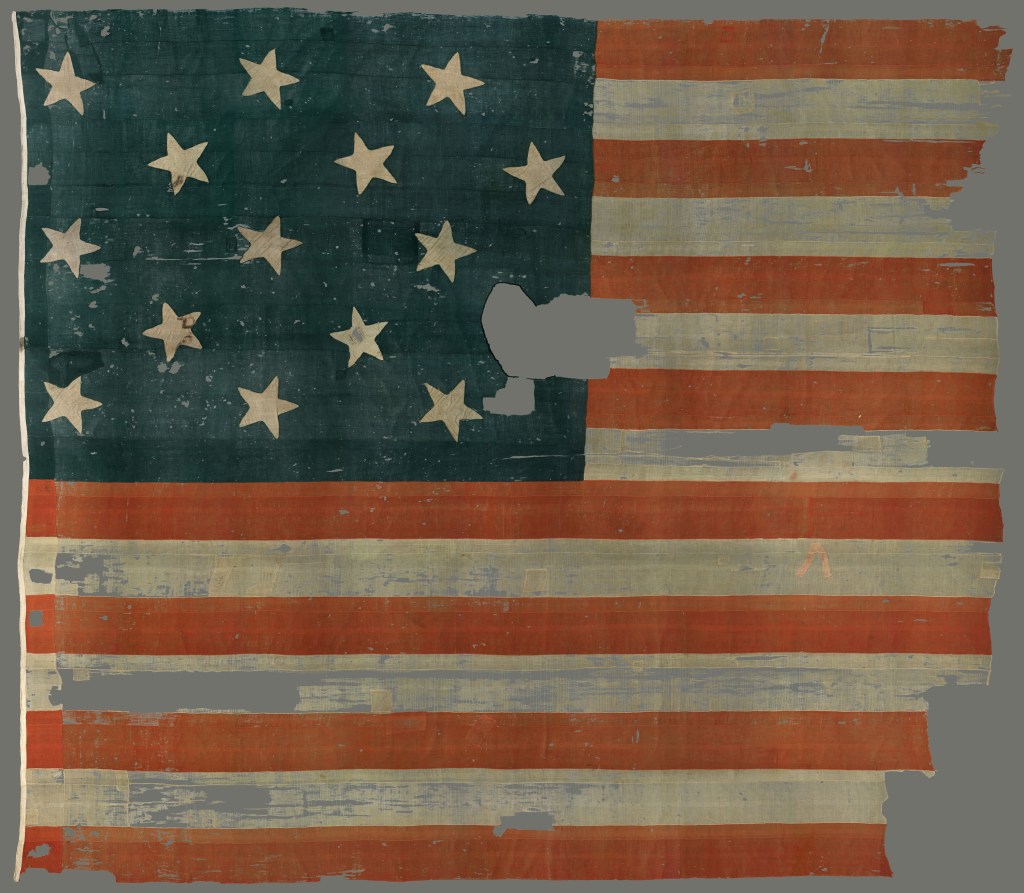
Adopting the Star-Spangled Banner
Francis Scott Key’s poem quickly became popular, with it appearing in newspapers across the country. Interestingly, it was recommended to be put to the tune of an English drinking song. The poem turned the flag from something simply used to identify military positions to an emotionally powerful symbol of American independence and resilience. Its famous “land of the free and the home of the brave” became a patriotic and political symbol. Despite its popularity, the poem would not become the national anthem until 1931.

