Spanish-American War Plaque
This medal-shaped plaque from the United Spanish War Veterans bears the names of the three areas of combat in one of America’s most forgotten wars – the Spanish-American War.

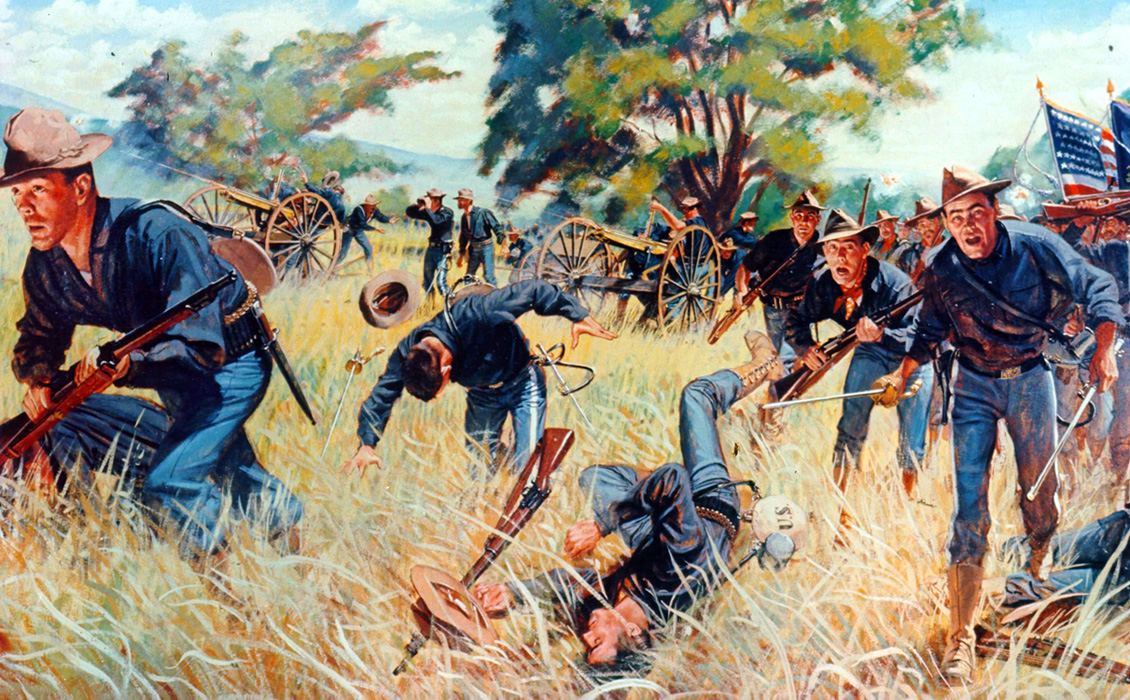
Buildup to War
In 1895, the people of Cuba rose up in rebellion against the Spanish, who had ruled Cuba as a colony since the 1500s. This revolution was widely covered by American newspapers, who published dramatic stories of Spanish atrocities and heroic acts by the Cubans. While both things did really happen in Cuba, the newspapers were not above falsifying, exaggerating, and sometimes making up stories. The suffering occurring in Cuba, as well existing sympathies for people rebelling against colonists and threats to American business interests, led to public demands for an intervention.
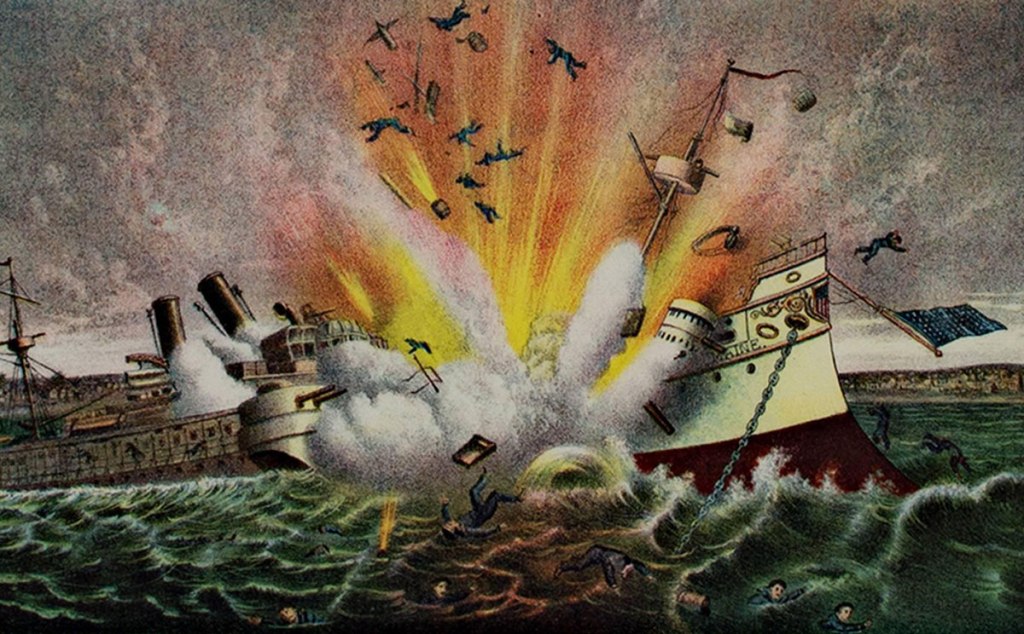
In December of 1897, the United States sent the USS Maine to Havana harbor to safeguard American citizens and property in Cuba. On the night of February 15, 1898, an explosion sank the USS Maine, killing 260 Americans. When a Navy report came to the decision that the explosion was caused by a mine or torpedo, American newspapers seized upon the event and cried for war. The phrase “Remember the Maine, to hell with Spain!” became a rallying cry. After failed diplomatic solutions and with incessant calls for intervention from the public, newspapers, religious leaders, and Congress, President McKinley was backed into a corner. On April 20, at his request, he was granted the authority to use the military to intervene in Cuba should the Spanish not immediately withdraw. On April 24, Spain declared war, with the United States reciprocating the next day.
The War
The war began very one-sided, with the far superior U.S. Navy decimating the Spanish fleet in the Philippines on May 1. The Philippines were a Spanish colony as well, and by July some 11,000 U.S. soldiers were in the country.
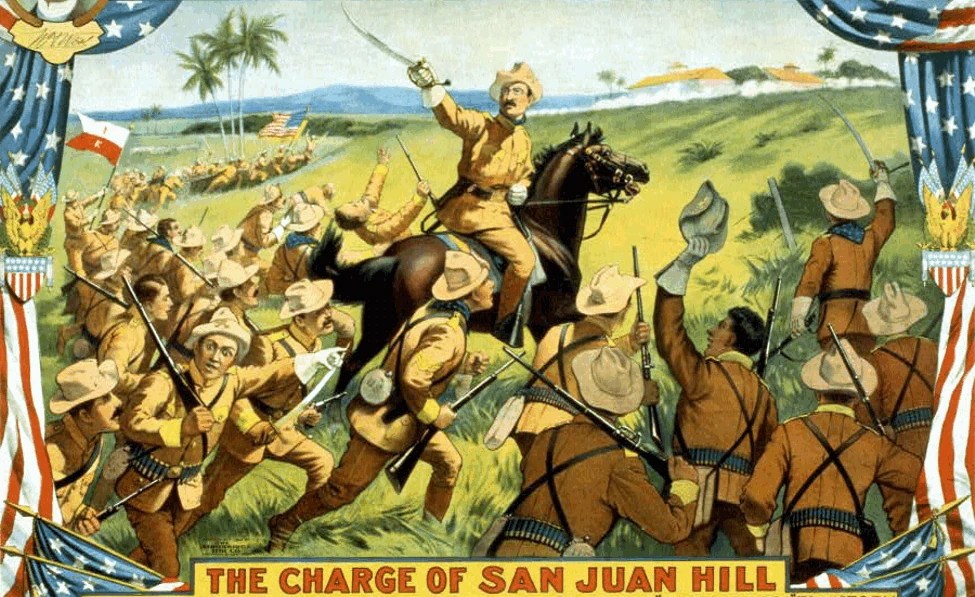
In Cuba, the Spanish fleet was blockaded in the port of Santiago, on the south side of the island. American troops, such as Theodore Roosevelt’s Rough Riders and two units of black soldiers, landed and began moving to surround the port. Despite precarious positioning and heavy casualties from diseases like malaria, American soldiers were at the outskirts of the city by July 1. Two days later, in attempt to escape the blockade, the Spanish fleet was destroyed by the American flotilla. Two weeks later, Santiago surrendered to U.S. forces. An American expeditionary force also landed on and captured Puerto Rico.
Fighting was concluded by August, with a peace treaty being signed on December 10, 1898. The peace treaty granted Cuba independence and handed control of Puerto Rico, Guam, and other Pacific islands to the United States. The treaty also stipulated that the U.S. would purchase the Philippines from Spain for $20 million. The treaty was barely passed by one vote in the Senate, on February 6, 1899. The war that Secretary of State John Hay called “a splendid little war,” was over.
Consequences of the War
Cuba became independent, although it experienced heavy American influence and control for decades to come. With the conclusion of the war and the increase in the strength of the U.S. Navy, the Caribbean became “the American Lake.”
Following the war, the United States began an aggressive pacification campaign in the Philippines, crushing the pro-independence forces. The Philippines would obtain self-government in 1935 and remain under American occupation until full independence in 1946.
As a result of the war, the United States gained control over several islands in the Pacific, including Hawaii, and would become a great empire. From the far edges of the Pacific, to the Atlantic, the United States stood as a world power.

