Viet Cong Flag
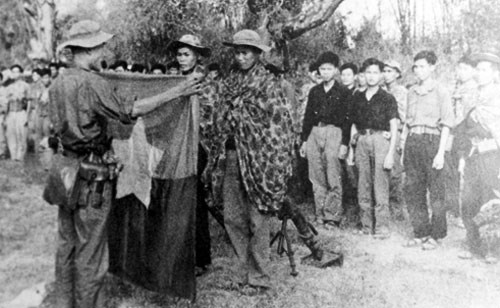
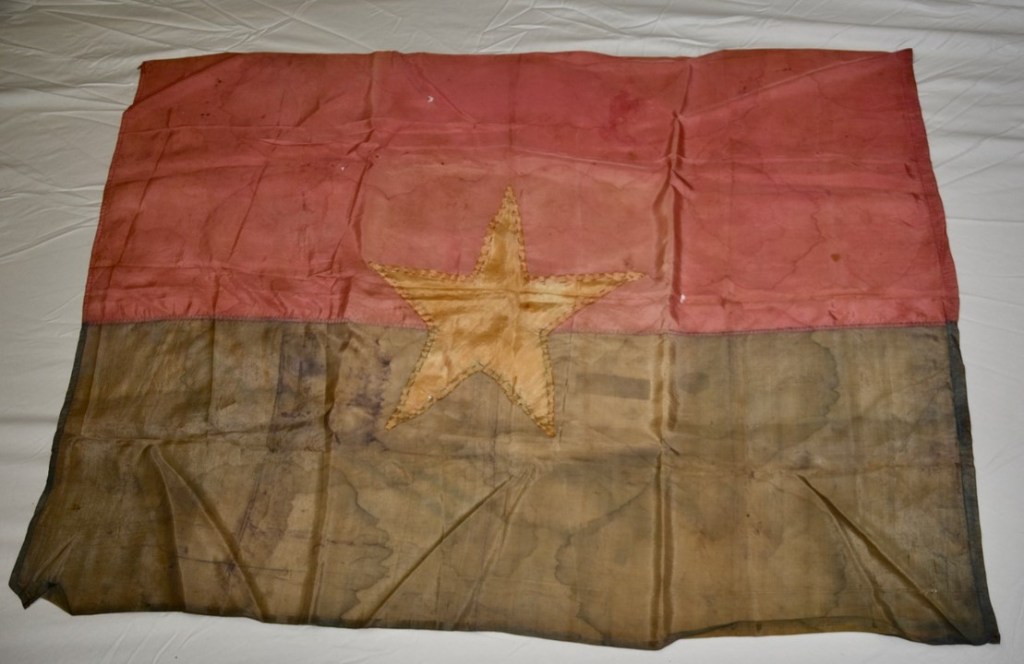
The worn, hand-stitched flag in this case is the flag of the Viet Cong, the communist guerilla army that the United States fought against in the Vietnam War. It is important to note that this flag was captured by an American soldier serving in combat, and is therefore a somber reminder of the sacrifices our troops made.
Vietnamese Independence and Division
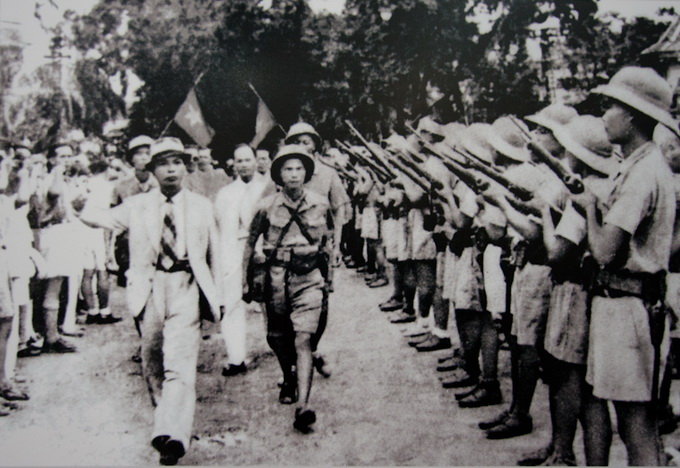
In 1941, a Vietnamese nationalist group called the Viet Minh was established to fight for Vietnamese independence. The Viet Minh, while largely led by communists, was not a uniform group, and there were several noncommunist members. At the time, Vietnam was occupied by the Japanese, who had taken the land from the French. At the end of World War II, the French sought to reestablish the colonial rule they had held in Vietnam since 1887. However, much of the country had been liberated by the Viet Minh, and a war for independence began.
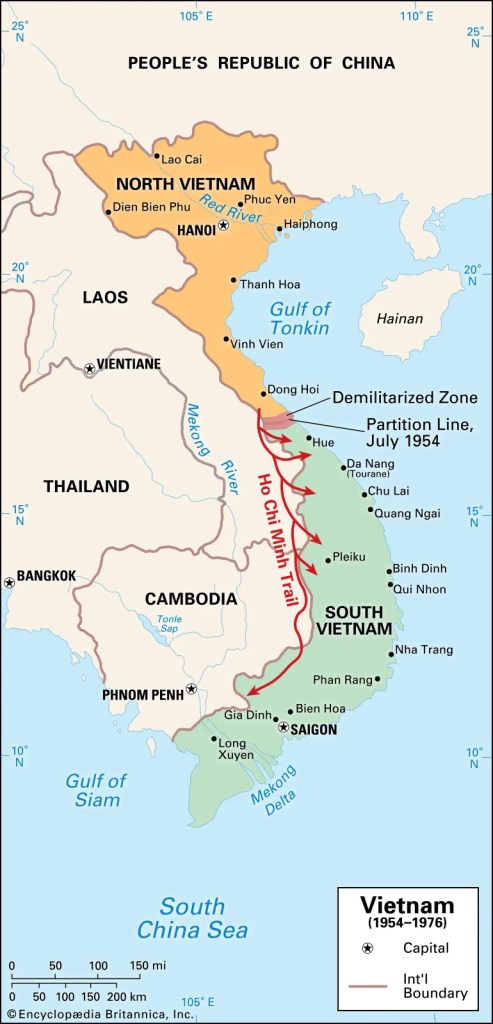
Despite US support, the French could not contain the movement for Vietnamese independence, and the Geneva Accords formalized Vietnamese independence in 1954. The accords split Vietnam in half along the 17th Parallel, with Communist forces establishing the Democratic Republic of Vietnam, better known as North Vietnam. The division was meant to be temporary, with elections and referendums on reunification in both the north and the south in 1956. However, Ngo Dinh Diem, the dictator of South Vietnam, rejected the idea of elections, and the division became permanent.
Resistance in South Vietnam
In 1957, the communist remnants of the Viet Minh in the South began a campaign of assassinations and terrorism to try and weaken the South Vietnamese government. In 1960, they took it a step further and established the National Liberation Front and the Peoples Liberation Armed Forces (PLAF). This group was composed of several dissident groups – and while it leaned communist, like the Viet Minh, it had noncommunist members. President Ngo Dinh Diem labeled this group “Viet gian cong san,” or “Communist traitors to Vietnam,” a name shortened by the Americans to what they are known as today: the Viet Cong.
The base of the Viet Cong were local guerillas – villagers who attacked government officials, recruited other townsfolk, and propped up the NLF when not doing their normal jobs. However, the real fighting force in the PLAF were the regular, full-time units trained and supplied by the North Vietnamese army via the Ho Chi Minh Trail.
The Viet Cong became popular in rural regions as a response to the oppressive and corrupt Diem regime. However, in the cities, they carried out indiscriminate terrorist attacks to spread fear and chaos among the South Vietnamese population.
Escalation
As time went on in the 1960s, it became increasingly clear that South Vietnam could not hold its own against the Viet Cong, and the US sent supplies, advisors, and troops to combat the guerillas and prop up the government.
The US fought against the Viet Cong, who were supplied by the North Vietnamese, Chinese, and Soviets. A policy of wearing down the communist forces was adopted, and while the communists suffered worse casualties than US forces, the Viet Cong never had its manpower depleted, and would simply retreat into the jungles when pressed. The US armed forces took to bombing North Vietnam to try to break off support for the Viet Cong. However, this tactic also failed to prevent North Vietnamese assistance.
In 1968, the Viet Cong launched the Tet Offensive, penetrating deep into South Vietnamese territory and cities. While the attack demoralized Americans back home, it was disastrous for the Viet Cong, which suffered devastating casualties. It took reinforcements from the North Vietnamese army to replenish forces.

An End to the War
In 1969, the Viet Cong formed the Provisional Republican Government (PRG) in the territories it occupied. At the same time, news of American casualties, disciplinary problems, and war crimes convinced much of the civilian population that the war needed to end. After years of negotiation, a peace settlement was signed in 1973, with US forces being fully withdrawn later that year.
By the time of the withdrawal, the Viet Cong was once again fighting the South Vietnamese army, and the North launched a full invasion in 1975. The South Vietnamese government crumbled, and the PRG took power. In 1976, Vietnam was reunited and the NLF and Viet Cong were absorbed into the communist North Vietnamese government. The Communist party continues to rule Vietnam today.
 Melbourne Liberty Bell Museum