
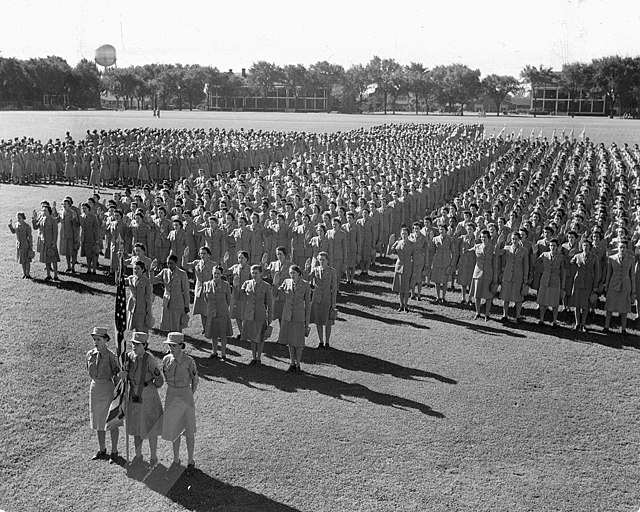
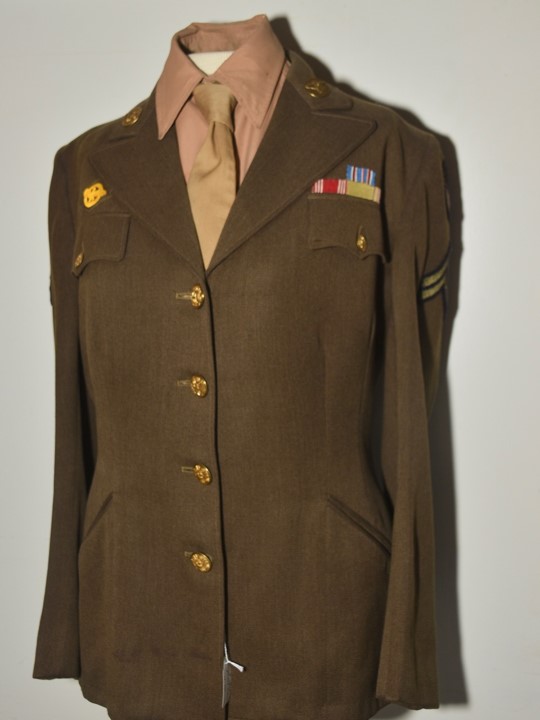
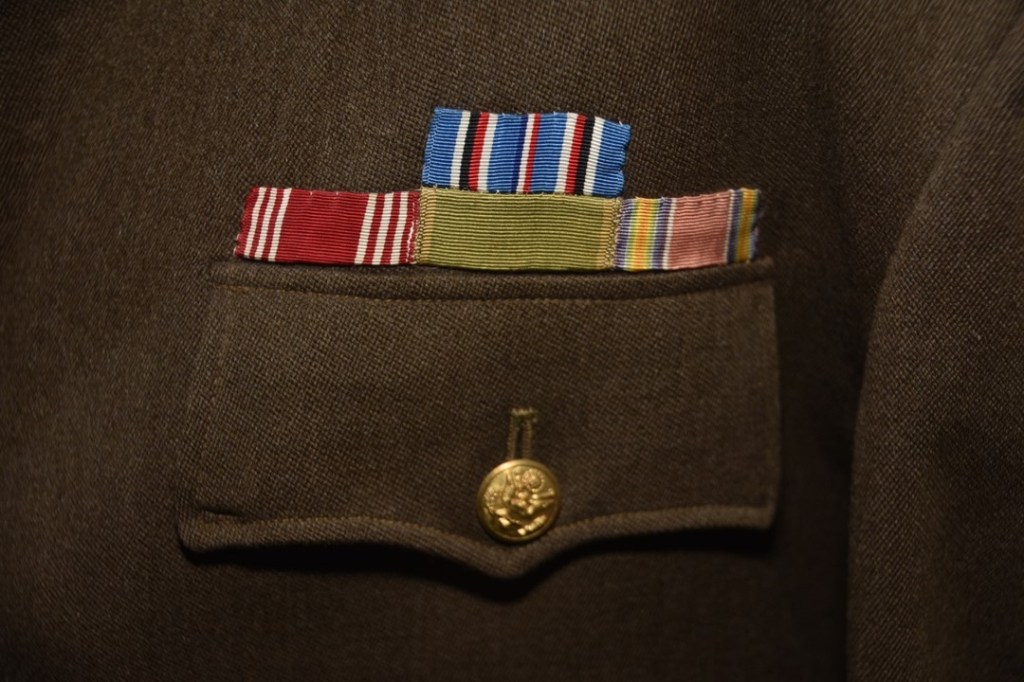
Jacket of the Women’s Army Corps
This jacket was worn by a member of the Women’s Army Corps, a ground-breaking organization in World War II that helped with the war effort and paved the way for women joining the military.
Women and the Army Before World War II
From the very beginning of our nation, many women have determinedly helped in its defense. In the Revolutionary and Civil Wars, civilian women followed the armies and helped with cooking, cleaning and other chores. Small numbers of women served as nurses, and there are many stories of women such as Deborah Sampson, who disguised themselves as men so they could fight. In 1901, the Army Nurse Corps was incorporated into the U.S. Army Medical Department, and civilian women served as telephone operators in World War I.
It is important to note that throughout this period, women were not allowed in the Army. Most of the roles women played in defending our nation were civilian. The nurses, despite being deeply involved in the Army’s medical services, were not awarded rank, pay, or benefits equal to male soldiers. To most Americans, a woman in the Army was unfathomable.
The Women’s Army Auxiliary Corps
Change began in May 1941 when Congresswoman Edith Nourse Rogers of Massachusetts introduced a bill to create an auxiliary force for women to serve. Despite support from some senior army officers, the bill languished in debate until after the Japanese attack on Pearl Harbor on December 7, 1941. Passing in May 1942, the bill made the Army the first branch of the armed forces to create a women’s detachment.
The Women’s Army Auxiliary Corps (WAAC) was established to have women serve in noncombat roles to allow men to be transferred to combat duty. Originally, four jobs were open to women. Within a year, that number had increased to over 400. However, it must be noted that the women served with the Army, rather than in it. Despite this, the recruiting goals were quickly exceeded. In January of 1943, a bill was introduced by Congresswoman Rogers that would transfer the WAAC into the Army, and it would be passed and signed into law by July 1943.
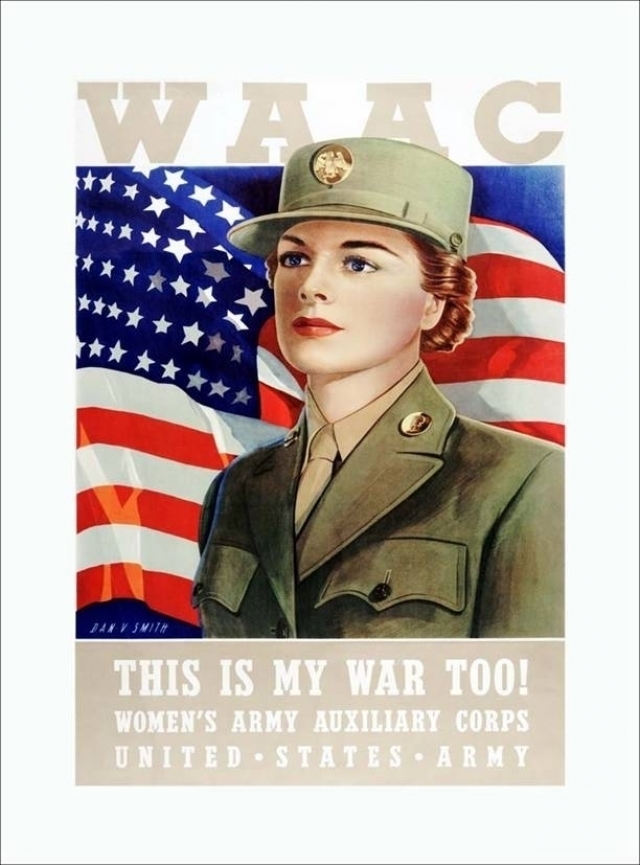
The Women’s Army Corps
With this law, the Women’s Army Auxiliary Corps became the Women’s Army Corps (WAC). The women in the WAC served in the army, rather than just with it. They were also given all of the rank, privileges, and benefits of male soldiers.
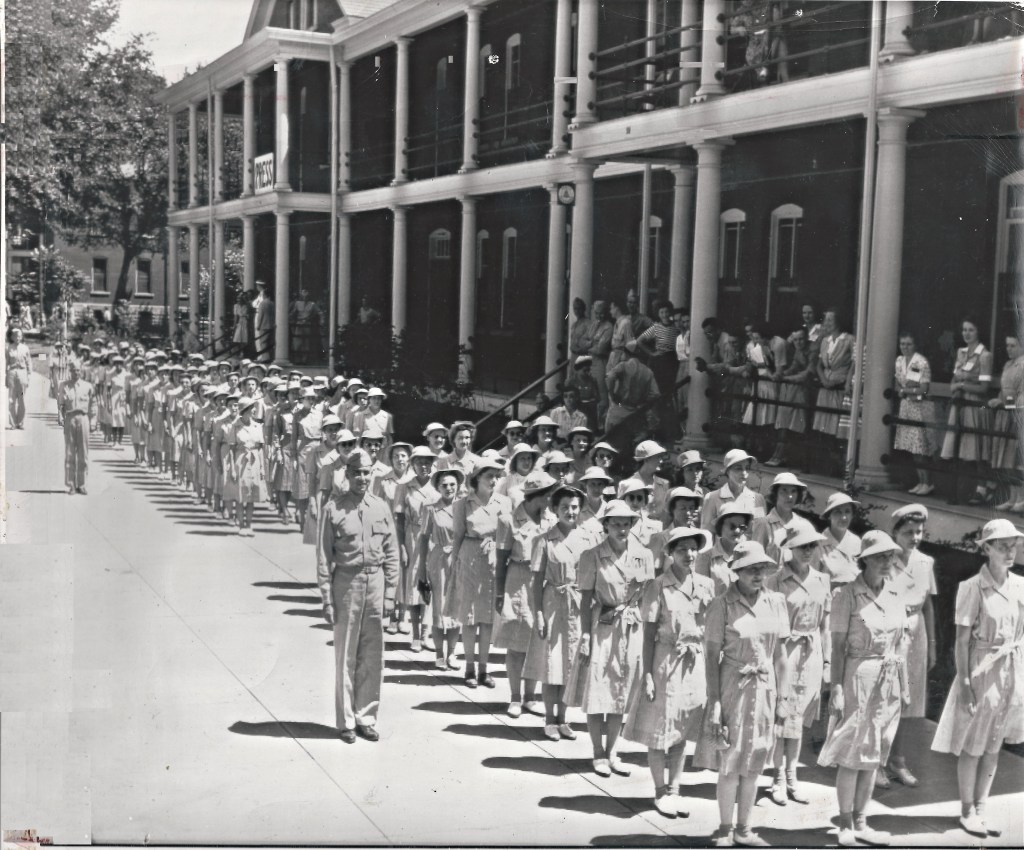
The women quickly took an active part in the war effort, serving overseas in positions formerly occupied by men. Women served as secretaries, mechanics, electricians, airfield control tower workers, and a variety of other jobs. In all their positions, the women worked hard and efficiently, earning the respect of both the highest leaders in the Army as well as the lowest foot soldiers.
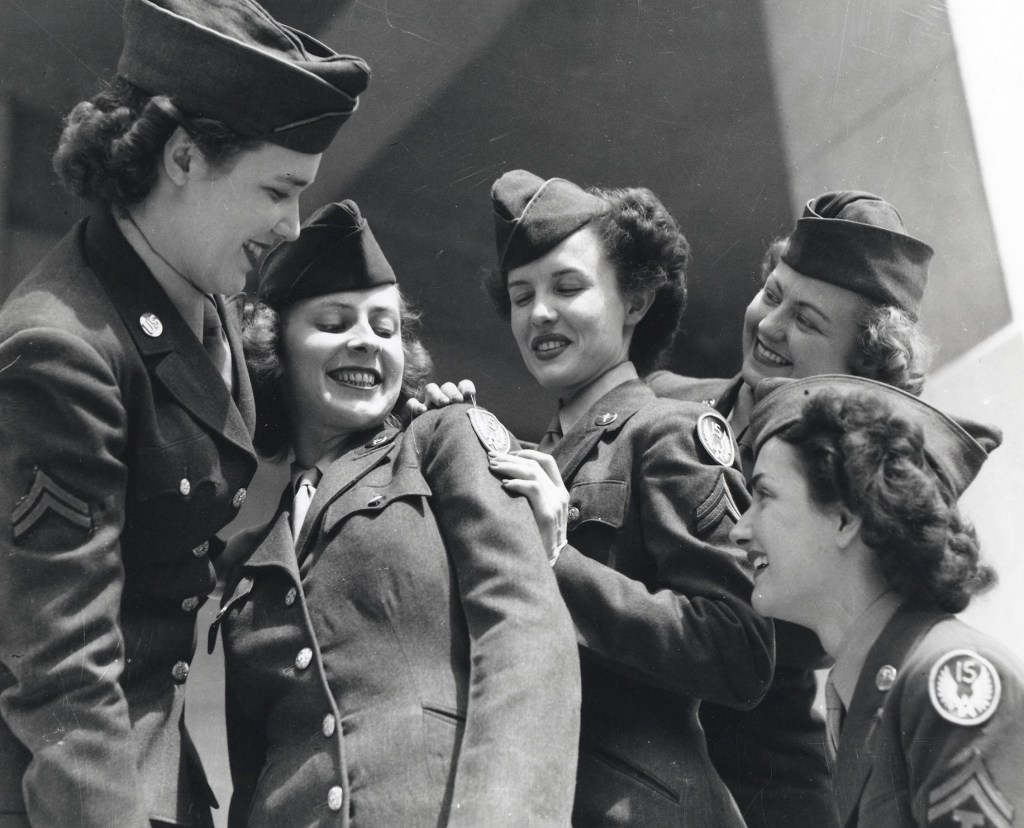
However, the women did not have it easy. Discrimination was still common in the male-dominated army, and the women faced sexual harassment and demeaning jokes. Back on the Homefront, women in the WAC were looked at with some suspicion – seen by many as people dangerously inverting gender norms. This distrust was combatted by First Lady Eleanor Roosevelt and high-ranking leaders in the army, but it continued throughout the war. Even after the war, many women in the WAC were seen with suspicion and had trouble finding employment.
Regardless of the issues they faced, the Women’s Army Corps served with distinction and gained the respect of many in the Army. The women who served were motivated by a strong love of country and a desire to help with the defense of their beloved freedoms. They took an important step for gender equality in both the armed forces and the nation as a whole and are respected and admired today.
In 1948, Women’s Armed Services Integration Act created a permanent place for women in the armed forces, and in 1978 the WAC was abolished, with women fully entering the regular army. Combat roles were opened to women in 1983, and piloting positions in 1989.

