
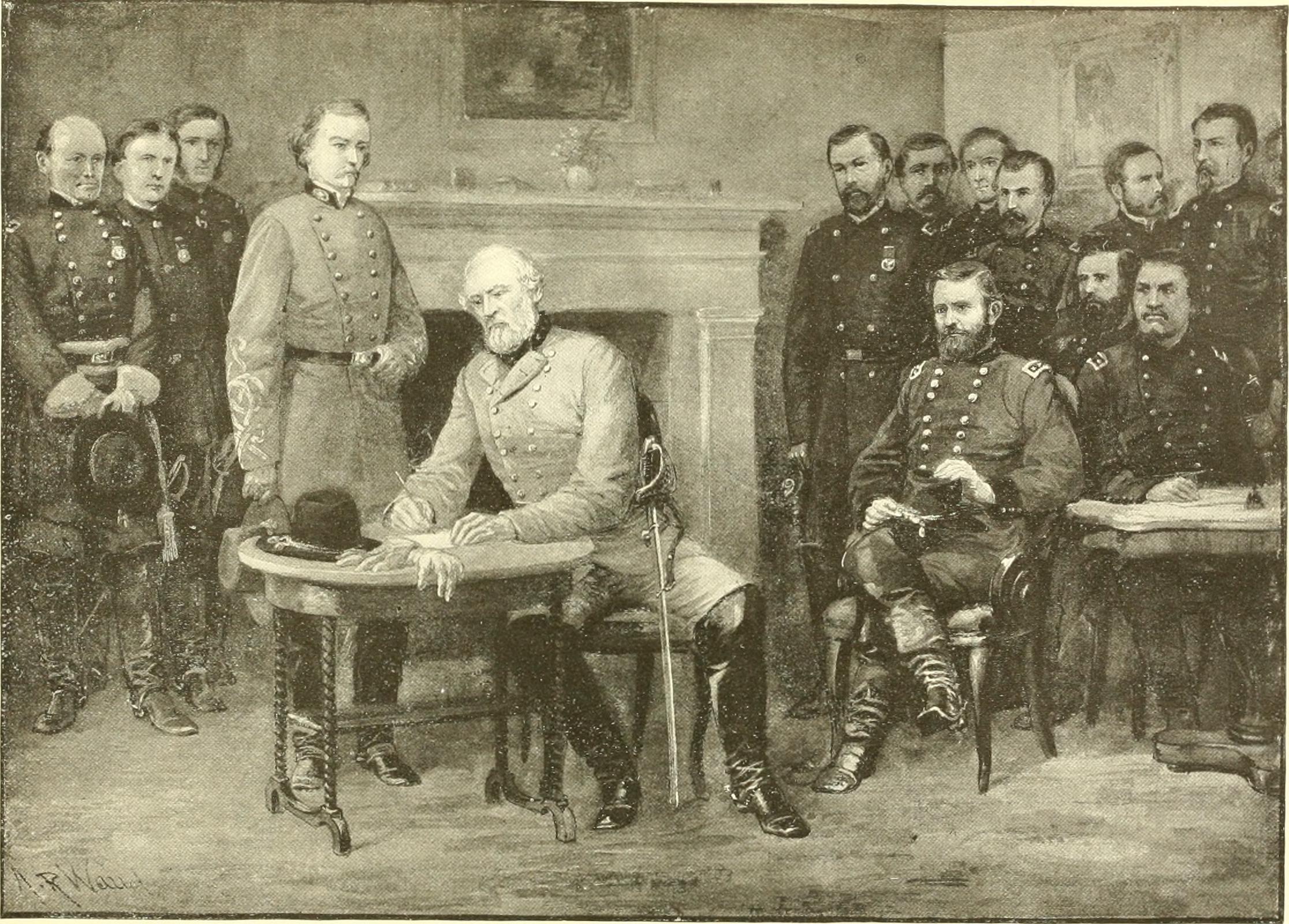
Portraits of Civil War Generals
These portraits are of three of the most important generals in the Civil War, both for the Union and the Confederacy.
Ulysses S. Grant
Grant was born Hiram Ulysses Grant on April 27, 1822, in Point Pleasant, Ohio. He enrolled at West Point in 1839, where he changed his name to Ulysses S. Grant due to a clerical error. Graduating in 1843 following a mediocre stint as a cadet, he distinguished himself in the Mexican-American War (1846-1848). In 1854, Grant left the army and shuffled around between failed business ventures.
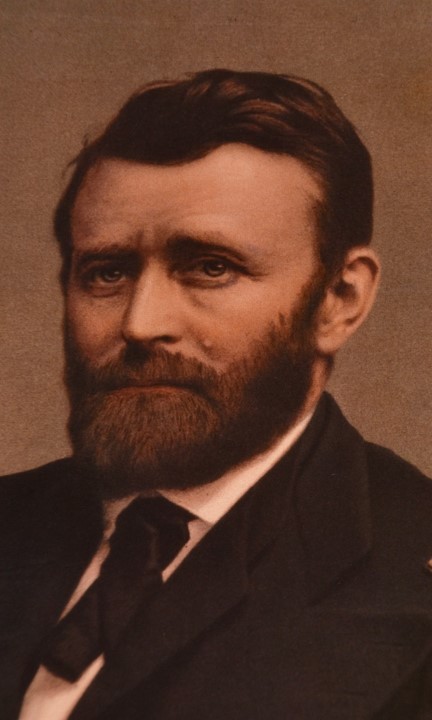
With the outbreak of the Civil War in 1861, Grant reentered the Union army as a colonel, but was quickly promoted to brigadier general and assigned to command the District of Southeast Missouri. On February 16, 1862, he won the first major Union victory of the war when Fort Donelson in Tennessee unconditionally surrendered. Grant was promoted to major general and repulsed a Confederate attack in the Battle of Shiloh. Criticized for taking heavy losses, Grant briefly lost his command, but was reinstated before beginning an advance on Vicksburg, Mississippi. The town, which was on the Mississippi River, was of vital importance since capturing it would allow the Confederacy to be cut in half. On July 4, 1863, he secured the city’s surrender. In March of 1864, Grant was promoted to lieutenant general and made the General-in-Chief of all Union armies. He consistently outfought the Confederate army in Virginia, eventually pinning down Robert E. Lee’s army at Petersburg, Virginia. His close relationship with General Sherman saw him approve his now famous march through Georgia. On April 9, 1865, General Lee surrendered to him at Appomattox Courthouse, marking the effective end of the civil war.
General Grant remained immensely popular after the war and would eventually go on to be elected President of the United States.
William T. Sherman
Born on February 8, 1820 in Lancaster, Ohio, and raised by Senator Thomas Ewing following his father’s death in 1829, William Tecumseh Sherman graduated from West Point in 1840 near the top of his class. He had an undistinguished career in the army, seeing some combat in the Second Seminole War, and none during the Mexican-American War. He left the army in 1853 and held a number of jobs before becoming superintendent of the Louisiana Military Academy in 1859.

When Louisiana seceded from the United States, Sherman went back north and volunteered for the Union in May 1861. He was made a colonel and led troops at the First Battle of Bull Run. He was then transferred to Kentucky, where he was promoted to brigadier general on August 7, 1861. Sherman experienced both success and failure in battle and was promoted to major general in 1862. Sherman rose to prominence in the campaign to capture Vicksburg, and it is here that he developed a tight relationship with General Grant. This partnership continued when Grant was promoted to General-in-Chief in 1864, with Sherman becoming the commander of the Western theater of the war. Sherman captured Atlanta in the same year, before beginning his now famous “March to the Sea.” Sherman cut his own supply lines, forcing his men to get food from the land. The result was a 300-mile-long path of destruction through the heart of Georgia as Union men took crops, destroyed rail lines, and freed slaves. Sherman held the belief that the war could be won quicker if the morale of Southern civilians was destroyed, and in this he was quite successful. After he took Savannah, Sherman continued his march up the Carolinas. Sherman accepted the surrender of all Confederate forces in Georgia, Florida, and the Carolinas on April 26, 1865. It was the largest surrender of Confederate troops in the whole war.
After the war, Sherman remained in the army, becoming a full general and serving as General-in-Chief from 1869 to 1883. He died in 1891.
Robert E. Lee
Robert E. Lee was born on January 19, 1807, at Stratford Hall, Virginia, to a Revolutionary War hero. He secured an appointment to West Point, where he graduated second in his class in 1829. Lee served in the Corps of Engineers for seventeen years before serving as a staff officer in the Mexican-American War (1846-1848), where he served with distinction and was promoted to colonel. Lee served as superintendent of West Point from 1852 to 1855 before taking a position in the cavalry. In 1859 he led US forces to defeat John Brown’s failed abolitionist uprising at Harper’s Ferry.
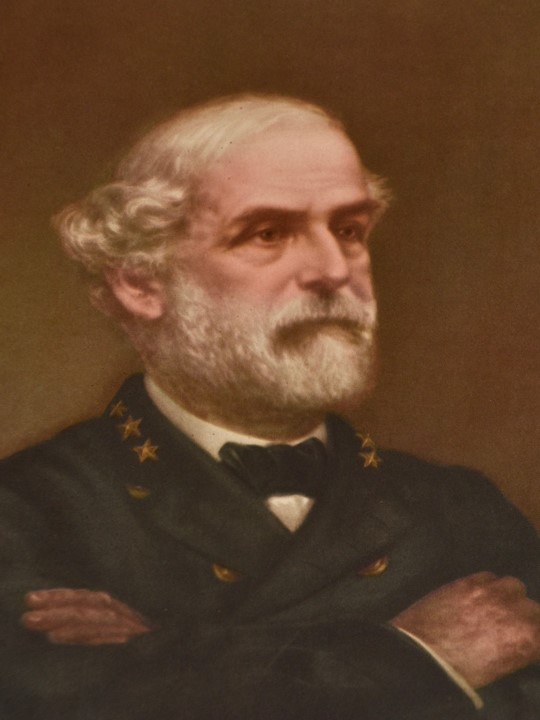
At the outbreak of the Civil War, President Lincoln requested that Lee command Federal forces. However, Lee refused when his home state of Virginia seceded, saying he couldn’t fight against his state. He became an officer in the Confederate army, seeing combat in Virginia. Lee became a military advisor to Confederate president Jefferson Davis before being assigned to command an army in Virginia in 1862. Lee renamed his command the Army of Northern Virginia and led it in an invasion of the north. This invasion was halted at the Battle of Antietam. For the rest of the year, Lee’s Confederate forces repelled Union attacks in northern Virginia. In June of 1863, Lee led another invasion of the north – one that would culminate at the famous Battle of Gettysburg on July 3, 1863. The crushing Confederate loss shook Lee’s faith in himself, and he offered to resign his command, which Jefferson Davis refused. After Ulysses Grant became the Union General-in-Chief in 1864, he began an aggressive campaign to destroy Lee’s army. Lee inflicted heavy casualties on the Union forces but was continually defeated by Grant’s army. Lee was pinned down in trench warfare at the Battle of Petersburg, a battle which his army barely managed to escape. However, on April 9, 1865, Lee surrendered to Grant at Appomattox Courthouse, effectively ending the Civil War.
After the war, Lee returned home on parole and became the president of Washington College (now called Washington and Lee University), a post he held until his death on October 12, 1870.

