
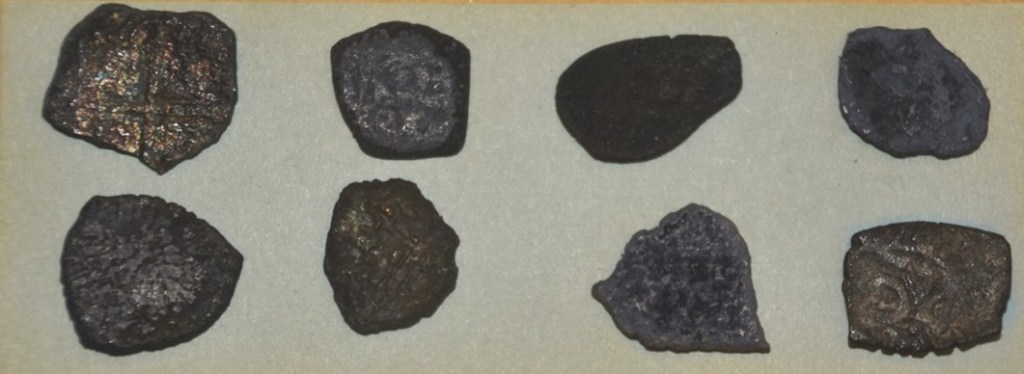
Spanish Silver Pieces
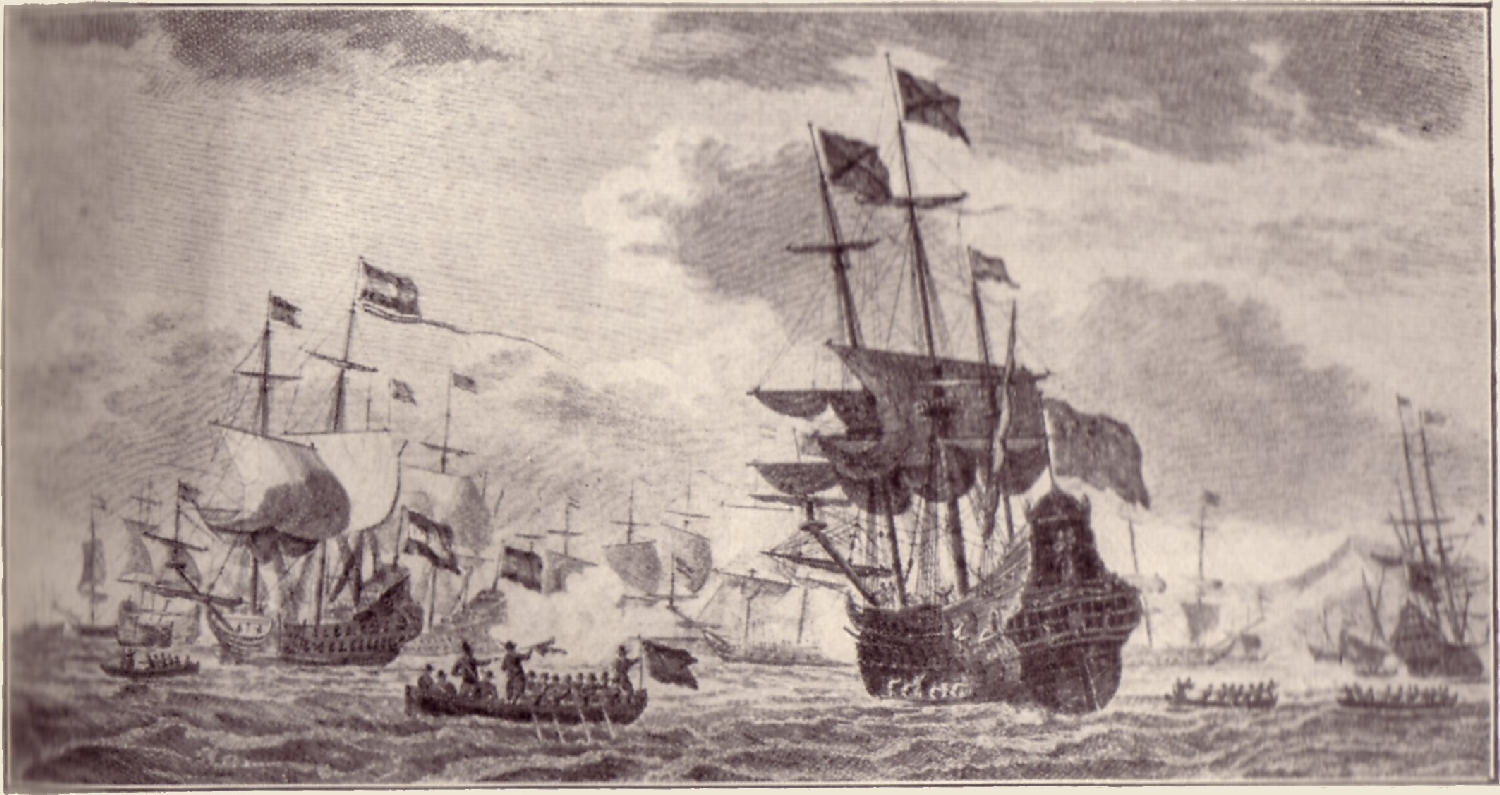
These small silver coins are those that were used by the Spanish, the original colonizers of Florida. Spanish coins have been found both at historic sites on land, as well as at the shipwrecks of Spanish ships.
The Spanish Discovery of Florida
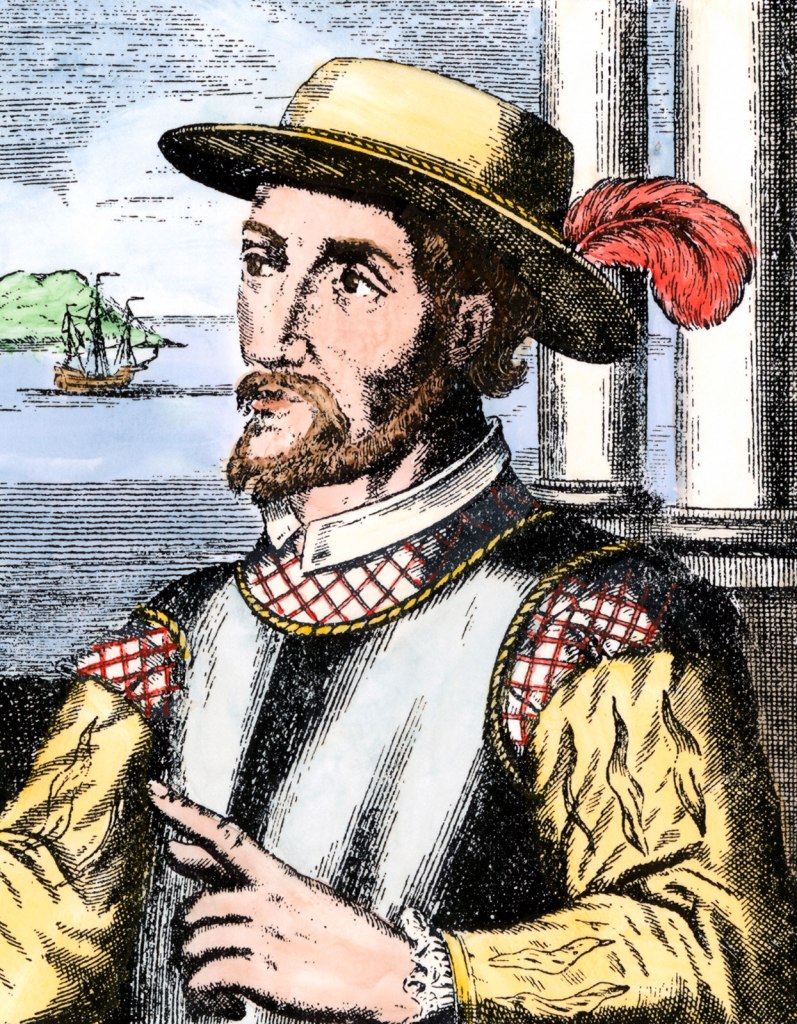
In 1513, Juan Ponce de Leon, the Spanish governor of Puerto Rico, landed in Melbourne Beach, making him the first European to definitively see Florida. He named the land “la Florida” after the Festival of Flowers (an Easter celebration that was happening at the time). He then sailed around the Florida Keys and landed again at Charlotte Bay before returning to Puerto Rico. In 1521, Ponce de Leon returned with 200 people in a failed attempt to establish a settlement – an endeavor that saw him lose his life.. Over the next 45 years, four Spanish expeditions in Florida were staged, with each one failing. Finally, in 1565, the Spanish succeeded in establishing a settlement named St. Augustine, which is now the oldest city in the US.
Spanish Rule in Florida
From 1565 onward, the Spanish gradually increased their control over Florida. By 1600, most of the original Native Americans had been killed by diseases brought from Europe. The Spanish established missions across Florida to convert the remaining natives to Catholic Christianity. In the 1600s, the Spanish introduced cattle to Florida, which became a major source of income. In 1695, the Spanish completed the Castillo de San Marcos, a fortress in St. Augustine. Two British sieges – one in 1702 and another in 1740 – attempted to capture the fort, with both failing.
In 1754, the French and Indian War broke out between Great Britain and France, with the Spanish allying with the French. The war was a British victory, and in 1763 the Spanish gave Florida to the British in return for the much more lucrative colony of Havana (which the British captured during the war). Thus ended the first period of Spanish rule over Florida.
The Spanish briefly regained control of Florida following the end of the American Revolution (Spain supported the US), until it was transferred to the United States in 1819.

Spanish Florida and Shipwrecks
At the time the Spanish colonized Florida, they had built a vast empire in South and Central America, and channeled thousands of tons of gold, silver, crops, and other valuables back to Spain. The waters around Florida were a common place great treasure fleets would sail. Hurricanes, accidents, and warfare have led to plenty of shipwrecks – many containing valuables. To this day, Spanish coins and other artifacts are being found both at beaches and at archaeological sites.
 Melbourne Liberty Bell Museum